How to Dial In an Espresso Grinder at Home: A Step-by-Step Beginner Guide
The first shots from a new espresso grinder are usually bad. They run too fast, taste thin, or dribble out in a slow, bitter trickle. That is not a sign you bought the wrong machine. It is simply a grinder that is out of adjustment, and the fix is a repeatable process rather than luck. Dialing in means making one deliberate change at a time until the coffee tastes balanced: sweet enough to be pleasant, with enough acidity to keep it lively and enough body to feel like something. Here is the order that wastes the least coffee.
Remove the Easy Variables First
Grind setting gets blamed for everything, but a shot pulled with an inconsistent dose or a sloppy tamp will taste wrong no matter where the dial sits. Before you touch the grinder, tidy up the rest of the routine.
Weigh your coffee on a scale accurate to 0.1 grams. Use the same basket every time, and fill it to the dose it was designed for — most double baskets sit comfortably around 17 to 19 grams; a basket that is underfilled or stuffed to the rim will misbehave. Let the machine heat properly, fifteen to thirty minutes with the portafilter locked in, because a cold group head pulls the temperature down through the whole shot.
Then keep your technique boring. Distribute the grounds level, tamp flat and firm without leaning on it, and lock the portafilter in the same way each time. You are trying to change one thing per shot; everything else should be as close to identical as you can manage.
The Three Numbers That Matter
Espresso dialing comes down to three measurable values. Write them down and the process stops being mysterious.
Dose
Dose is the dry coffee in the basket, in grams. Pick a number and hold it — 18 grams is a sensible starting point for a standard double — and leave it alone while you work on grind.
Yield
Yield is the liquid in the cup, also in grams. Weigh it. Volume in milliliters is unreliable once crema is involved, and eyeballing the shot is how people end up with 50-gram shots and wondering why they taste watery.
Time
Time runs from the moment you start the pump to the moment you reach your target yield. A common starting point is 18 grams in, 36 grams out, in roughly 25 to 30 seconds, a ratio of 1:2. Treat that timing as a reference, not a rule. Time is what happens as a result of grind, dose and the coffee itself; it is a diagnostic, not a target you force.
Your First Dial-In Session, Step by Step
- Set a middle-fine grind. Start finer than you think you need, since most beginner shots run fast. Note where the dial is so you can return to it.
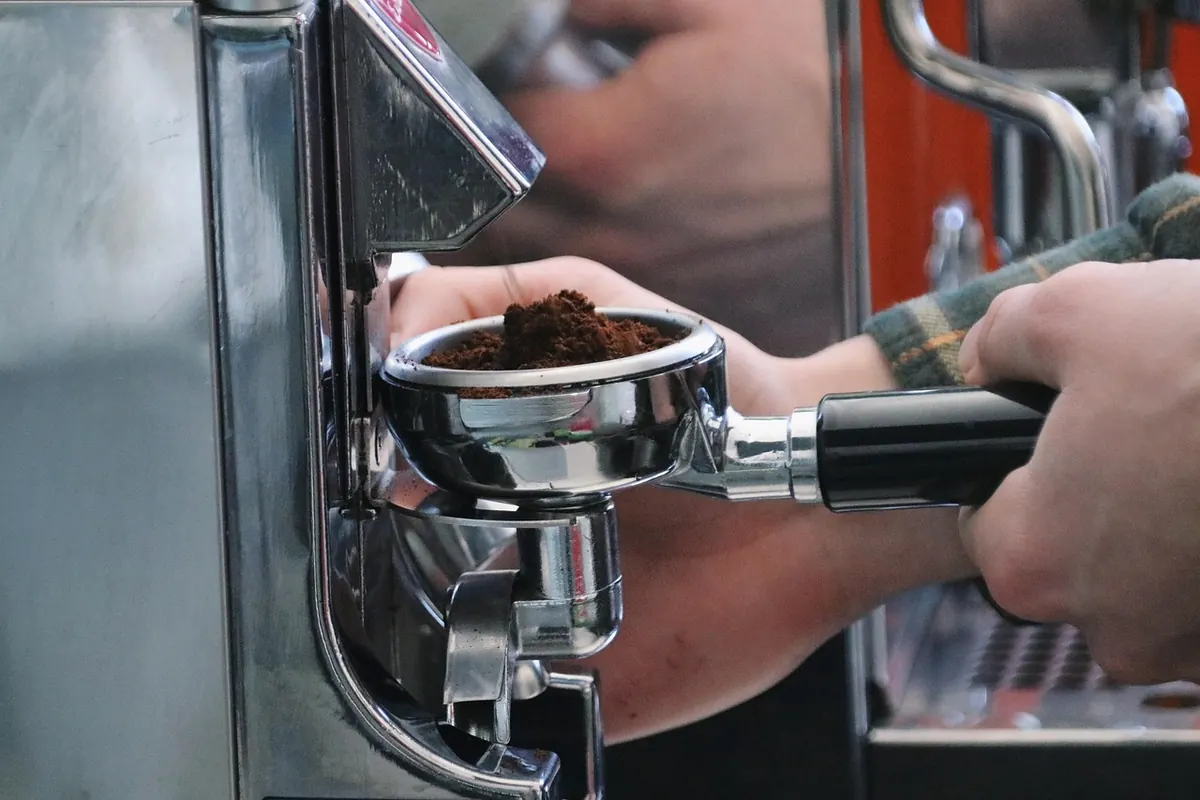
- Grind and weigh. Grind directly into the portafilter and check the dose on the scale, adding or removing a bean's worth of grounds as needed.
- Distribute and tamp. Level the bed, then tamp straight down. If you have a distribution tool or a needle stirrer, use it the same way every time.
- Set up the shot. Place the cup on the scale, tare it, start the pump and the timer together.
- Stop at your target yield. Not when the stream looks blond, not when it "feels right" — at 36 grams on the scale. Note the time it took.
- Taste it. Actually taste it. Let it cool for a minute; very hot espresso hides a lot.
- Change one thing and repeat. After each grind adjustment, grind and discard a few grams before pulling the next shot, because the first grounds through the chute still reflect the old setting.
What the Shot Is Telling You
Fast, thin and sour
If 36 grams arrive in eighteen seconds and the shot tastes sharp, acidic or watery, the water is racing through the puck. The grind needs to be finer. Small steps — a notch or two on a stepped grinder, a slight nudge on a stepless one — then pull again.
Slow, thick and bitter
If the shot takes forty-five seconds to reach 36 grams and tastes harsh, drying or ashy, the puck is resisting. Go coarser. Very slow shots also tend to channel, so fix the flow before worrying about anything else.
Uneven and hollow
Squirting from the spouts, a pale patch on the puck, or a shot that looks fine but tastes both sour and bitter at once usually points to channeling — water finding a crack rather than passing evenly through the coffee. Improve distribution, check that the basket is not overfilled, and make sure the tamp is level.
Taste is the final judge. Numbers get you into the right neighborhood; your palate chooses the house.
Fine-Tuning by Taste
Once you are landing near 36 grams in 25 to 30 seconds, stop chasing numbers and start adjusting for flavor. If the shot is sour and thin, grind finer or extend the yield slightly — a 1:2.2 or 1:2.5 ratio pulls more sweetness out of light-roasted beans. If it is bitter and drying, grind coarser or shorten the yield toward 1:1.8. Lighter roasts generally want finer grinds and longer ratios; darker roasts and decaf often want the opposite.
Change grind for balance and change ratio for style. Keep dose fixed unless you are deliberately moving to a different basket size. And give each setting two shots before you judge it — one shot can be an outlier, and grinder retention means the first shot after an adjustment is rarely clean.
When the Grinder Drifts
A grinder that was perfect last week will often need a nudge this week. That is normal. Expect to re-dial when:
- You open a new bag of beans, even the same roast. Fresh coffee grinds differently as it rests.
- Beans are very fresh from the roaster — under about five days — and still releasing gas.
- The weather turns humid, which changes how grounds behave in the basket.
- You switch to decaf, a different roast level, or a different origin.
- The burrs are due for a clean. Oily residue and stale grounds change the grind more than most people expect.
Keep a Log, Then Stop
A small notebook, or a note on your phone, is the most useful accessory you can buy. Three columns: grind setting, dose and yield, time and a one-word taste note. After a couple of weeks you will see your grinder's patterns, and the next bag of beans will take three shots instead of twelve.
Finally, give yourself permission to finish. Aim for a shot that tastes good black, then drink it — with milk if that is how you take it, though know that milk flatters flat, bitter espresso considerably. Two or three small adjustments per session is plenty; palate fatigue sets in quickly and every shot after that tastes wrong. Dial in, log it, and go enjoy the coffee.
Photo: tookapic / Pixabay